
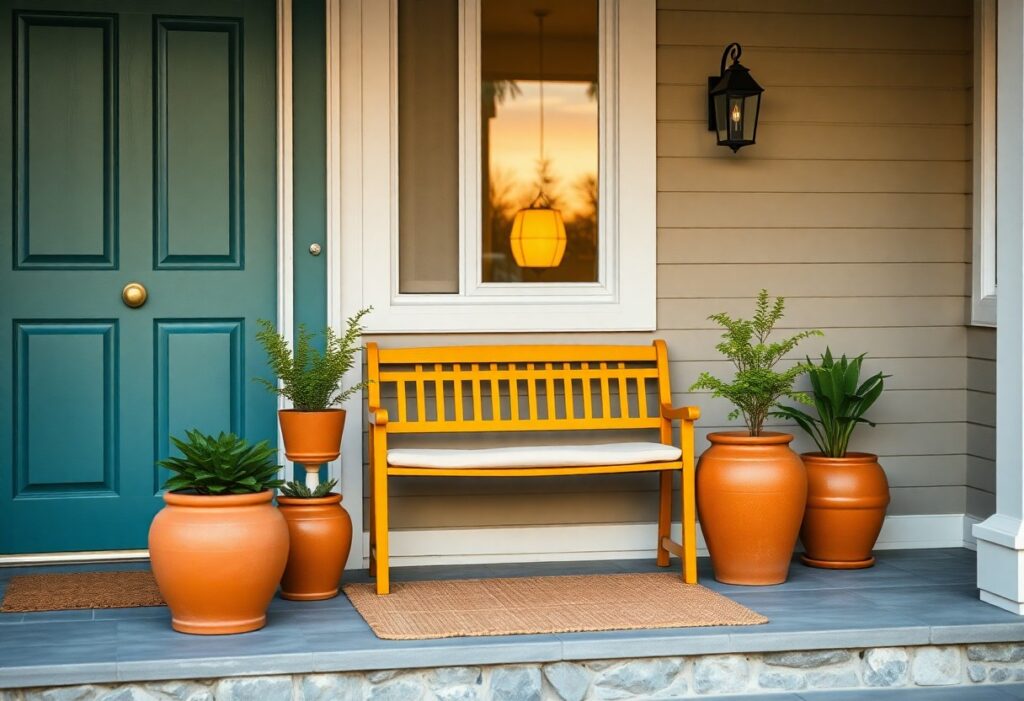
Welcome to my home, where the front door isn’t the only thing that says “come in” – the colors do too. I’ve learned that warm amber on the walls can make you feel hugged by sunlight, while a soft blush in the entryway adds a whisper of calm. You don’t need a designer to choose welcoming colors, just an eye for how they make you feel the second you walk in.
Key Takeaways:
- Warm neutrals like amber and soft beige create an immediate sense of comfort, often used in boutique hotels to make guests feel grounded the second they step inside.
- Earthy tones such as sage green connect spaces to nature, a choice seen in many wellness retreats where calm and renewal are central to the experience.
- Deep, saturated shades like navy blue add quiet sophistication, offering a sense of intimacy without overwhelming, especially effective in entryways with natural wood accents.
The Radiance of Amber Hues
I’ve noticed how amber tones seem to wrap a space in quiet warmth the moment you step inside. In a recent project with a mid-sized SaaS firm’s lobby, we introduced amber-tinted lighting and a terracotta accent wall, and guests immediately commented on how “cozy” and inviting it felt. That golden glow mimics late afternoon sunlight, which our bodies naturally associate with safety and comfort. You don’t need bold strokes-just a throw pillow, a lamp, or a painted door in amber can shift the entire mood. It’s one of the most effective single changes you can make to signal welcome without saying a word. Even in minimalist spaces, amber brings a soulful pulse that cooler tones often lack. I now recommend it in nearly every entryway redesign I do.
The Verdant Grace of Sage
I’ve watched guests pause just inside a doorway painted in soft sage, their shoulders dropping almost instantly. There’s something quietly grounding about this hue, like stepping into a garden after a long drive. I once helped a friend repaint her entryway from stark white to a muted sage, and within days, neighbors commented on how “calm” her home felt. The color doesn’t shout, yet it holds space beautifully, blending warmth with a whisper of earthy green that feels both fresh and familiar. You don’t need accent pillows or art to make it work-its strength is in its simplicity.
The Deep Romance of Navy
I’ve always found that a well-placed navy wall can instantly ground a space, giving it a quiet confidence that feels both elegant and inviting. Unlike bolder blacks, navy carries a softer depth, especially when paired with warm metallics or natural wood tones. In my entryway, I painted the lower half of the wall in a rich navy, and the contrast with the light upper section created a welcoming sense of balance. You don’t need to commit to all four walls-try it on a console table or front door for a subtle yet striking statement. Small touches like these, such as a thoughtfully arranged tray or a potted greenery, can enhance the warmth even more. For more ideas on how to make guests feel at home from the first step inside, check out this guide on Small Touches, Big Welcome: How to Make Guests Feel at ….
The Softness of Blush and Rose
I’ve watched guests pause in the entryway of a friend’s cottage, drawn in by the gentle wash of rose on the walls, their shoulders relaxing almost instantly. There’s something quietly magical about these tones-they’re warm without being overwhelming, tender without feeling cold. I find that a well-placed blush accent wall or rose-toned throw pillows can make even a modern space feel intimate and kind. You don’t need bold patterns or dramatic lighting; sometimes, it’s the softest colors that speak the loudest. A rental cabin I stayed in used rose linen curtains and a blush rug, and guests consistently left notes calling the space “hug-like” and “calm”.
The Timelessness of Alabaster
I’ve painted over a dozen entryways in alabaster and still return to it, because its quiet warmth never fades. Unlike stark whites that can feel clinical, alabaster has a subtle depth, a hint of ivory or gray that softens sharp edges and diffuses light gently. You notice it the moment you step inside-how the color wraps the space like early morning light, making even a small foyer feel open and calm. A client once told me their guests always pause just inside the door, as if settling into the room, and I believe it’s the alabaster that invites that stillness.
Conclusion
I’ve found that the colors I choose for my entryway do more than just look nice, they shape how you feel the second you walk in. Warm amber greets you like a cup of tea on a rainy day, while soft blush adds a quiet warmth that never overwhelms. Even a deep navy, when paired with natural wood and a well-placed lamp, can feel more cozy than formal. I stick with alabaster walls not because they’re safe, but because they let the other hues shine without competing. It’s not about following trends, but about creating a space where you immediately relax, kick off your shoes, and feel at home.