
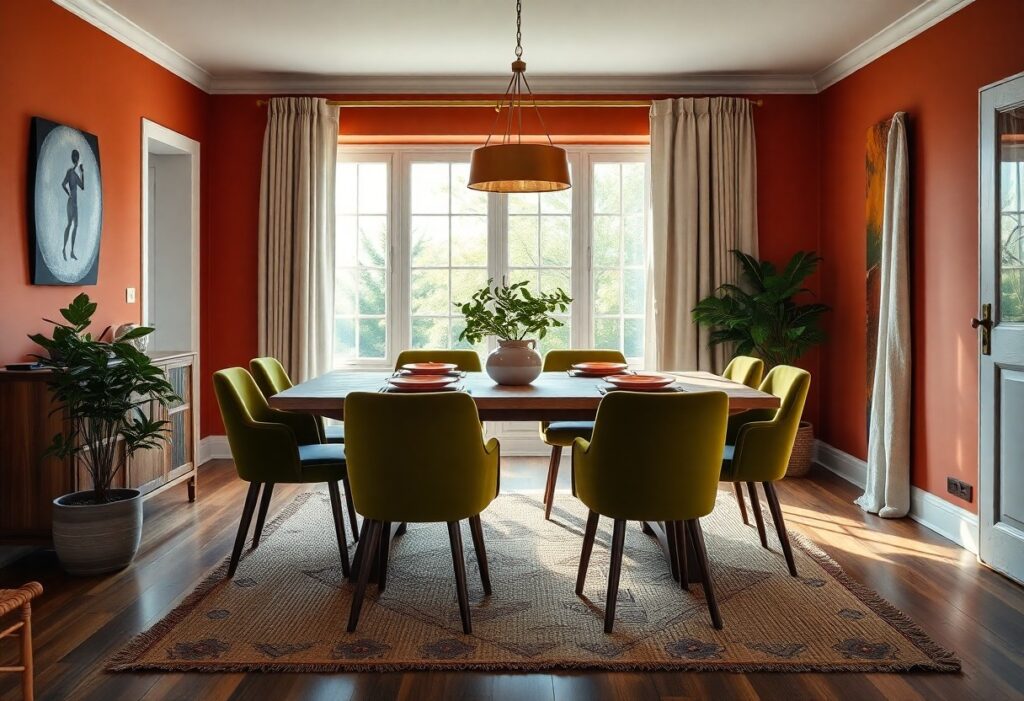
Over years of designing residential spaces, I’ve found that warm neutrals like beige, taupe, and soft gray create the most welcoming dining rooms. I always recommend deep terracotta or muted olive green for adding warmth without overwhelming your space. You’ll notice how these tones enhance lighting and encourage conversation, making your dining area feel cozy and intentionally inviting.

Key Takeaways:
- Warm neutrals like beige, taupe, and warm gray create a cozy atmosphere by reflecting soft light and pairing easily with different textures and materials.
- Earthy tones such as terracotta, olive green, and deep rust add natural warmth and depth, helping the space feel grounded and welcoming.
- Accent colors like mustard yellow or deep navy in moderation can enhance intimacy and visual interest without overwhelming the room’s sense of comfort.
The Warmth of Terracotta and Spice
I find that terracotta brings an earthy depth to dining spaces, instantly making them feel grounded and welcoming. You’ll notice how its subtle red undertones enhance warmth without overwhelming the senses. When I pair it with spice hues like mustard or cinnamon, the room gains richness and intimacy, perfect for lingering dinners. These colors work best with natural wood tones and soft lighting to amplify their cozy effect.
The Sophistication of Deep Navy
I’ve found that deep navy wraps a dining room in quiet elegance, making it feel both intimate and refined. You don’t need bold patterns or bright accents-this shade stands strong on its own. One coat on all four walls can transform your space into a moody, inviting retreat, especially when paired with warm metallics or soft lighting. I often recommend it for those who want drama without overwhelm.
The Softness of Sage Green
I find that sage green wraps a dining room in quiet warmth, making your space feel both grounded and open. You don’t need bold accents when this hue naturally balances calm with character. If you’re wondering how can I make this room more inviting, better decorated, start with sage-it answers both questions effortlessly.
The Radiance of Buttercream Yellow
I love how buttercream yellow wraps a dining room in soft warmth, making every meal feel like a sunlit celebration. You’ll find it opens up smaller spaces while adding a cheerful, timeless charm. For more inspiration, explore these 28 Inviting Dining Room Paint Colors for Every Space to see how this hue pairs beautifully with wood tones and crisp whites.
The Drama of Charcoal and Slate
I find charcoal and slate bring a quiet intensity to your dining space. These deep, cool tones create a sophisticated backdrop that makes warm wood tones and metallic accents stand out. You’ll notice how they absorb light, adding intimacy, but balance is key-pair them with soft lighting to avoid a sterile feel. I’ve seen this palette turn ordinary meals into memorable gatherings.

The Charm of Dusty Rose
I find dusty rose brings a quiet warmth that transforms dining spaces into intimate retreats. You’ll notice how its soft, muted tone pairs beautifully with natural wood and gold accents, creating a soothing yet sophisticated atmosphere. Unlike bolder pinks, this shade never overwhelms-instead, it wraps your room in subtle elegance, making every meal feel like an event worth savoring.
Final Words
The colors I choose for your dining room directly shape how warm and welcoming it feels. I rely on soft neutrals, warm earth tones, and deep accent hues because they create intimacy and comfort. You don’t need bold statements-just thoughtful choices that reflect your style and invite conversation. I’ve seen how the right palette transforms meals into moments.