
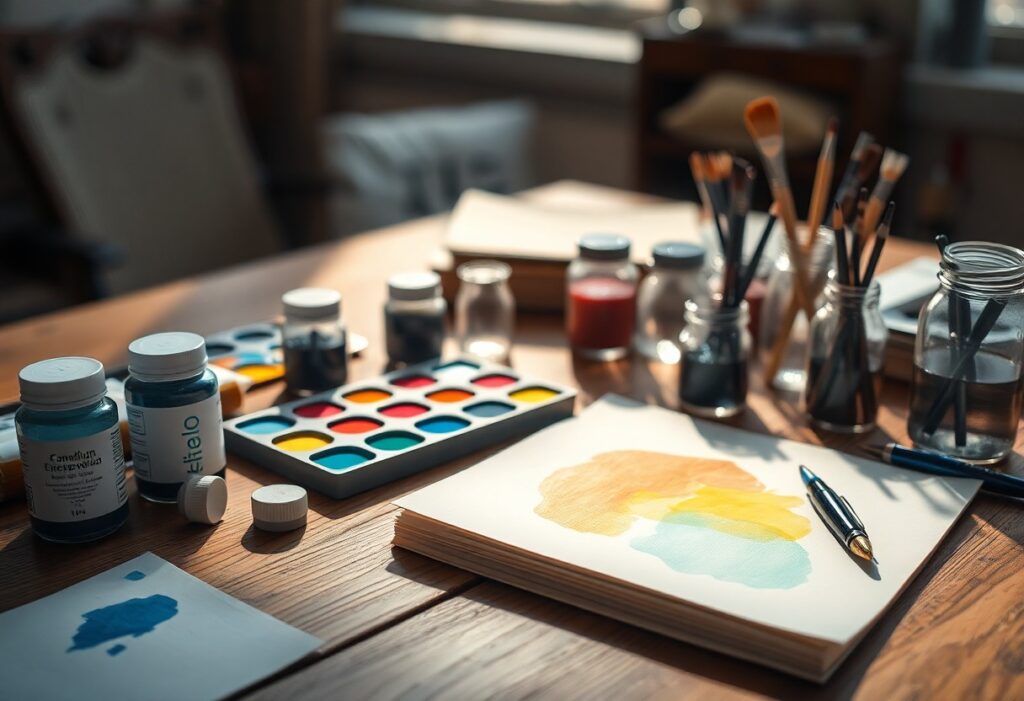
Many creatives overlook how deeply color influences mood and imagination, but I’ve found that specific hues can unlock focus, emotion, and originality. You don’t need a rainbow-just the right shades-to transform your process. From calming blues that deepen concentration to bold reds that spark urgency, I’ll show you which colors truly enhance creative output and why they work.
Key Takeaways:
- Blue encourages calm focus and deep thinking, making it a top choice for artists and writers seeking clarity and emotional depth in their work.
- Yellow stimulates creativity and optimism, helping creative minds feel more energized and open to new ideas.
- Green supports balance and renewal, offering a soothing backdrop that enhances concentration without draining mental energy.
The Royal Solitude of Deep Blue
Midnight hues for the midnight oil
I’ve often found that deep blue pulls me into focus when the world quiets down. This shade sharpens concentration, making late-night writing sessions feel purposeful rather than exhausting. You may notice how it dims distractions, allowing your thoughts to surface with clarity and calm.
The ocean of the inner mind
I see deep blue as a mirror of the subconscious-vast, mysterious, and full of unseen currents. It invites introspection, drawing you beneath the surface of daily noise into deeper emotional truths. This color doesn’t shout; it whispers insights only the patient mind can hear.
When I paint or write beneath its influence, I feel as though I’m wading into waters where memories and dreams intertwine. Deep blue doesn’t just represent depth-it creates it, shaping the space where breakthrough ideas emerge from silence. You may find your most authentic voice surfaces when you let this color guide you inward.
The Audacity of Madder Red
I feel the pulse of madder red before I see it-it surges through canvas and page like a heartbeat. This is not a color of suggestion; it demands presence, ignites urgency, and refuses to be diluted. You don’t choose madder red lightly. It chooses moments when silence must break.
Vitality in the stroke of a pen
Energy lives in the friction of nib on paper, and madder red amplifies it. I’ve watched hesitant lines transform into declarations when this hue hits the page. One stroke can resurrect a stalled idea, turning doubt into momentum. You feel it-not as decoration, but as propulsion.
Passion as a structural necessity
Passion isn’t just emotion-it’s architecture. I build entire projects on the spine of madder red because it holds weight. When logic falters, this color reminds you why you started. You rely on it not for flair, but for endurance, for the quiet strength that keeps creation moving.
Without passion, even the most disciplined routine collapses under its own repetition. I’ve learned that madder red symbolizes more than intensity-it’s the anchor during creative erosion. It doesn’t shout; it persists. You return to it when inspiration fades, not because it dazzles, but because it stabilizes, grounding your voice when everything else feels temporary.
The Intellectual Clarity of Ochre
I find ochre grounding-not dull, but deeply wise. It doesn’t shout for attention; instead, it invites you into stillness, where thoughts settle like dust in sunlight. This is the color of ancient manuscripts and sunbaked cliffs, where clarity emerges not from brightness, but from endurance. When your mind feels scattered, ochre offers a quiet return to focus.
Earthy foundations for lofty ideas
You build breakthroughs on stable ground, not air. Ochre connects you to that foundation-the soil beneath innovation. I’ve watched writers pause, stare at a wall painted this hue, and suddenly speak their truest sentence. It’s not flashy, but it holds space for brilliance to rise from something real.
Sunlight caught in ancient dust
Light lives in ochre, but not the kind that blinds. I see it in cave paintings where pigment was prayer, where early humans mixed soil and fat to say *I was here*. This shade holds the warmth of time itself, a reminder that your voice, too, can echo across centuries.
When I study ochre closely, I notice how it shifts with the light-dull at noon, glowing at dusk. That transformation mirrors creativity: sometimes hidden, sometimes radiant. The pigment comes from iron oxide, literally rusted earth, yet it carries the most human stories we’ve ever told. You don’t need neon to make meaning. Sometimes, all you need is sunlight caught in ancient dust.
The Melancholy Grace of Violet
I find violet carries a quiet depth that stirs the soul-its blend of blue’s calm and red’s passion creates a profound emotional resonance. You don’t just see violet; you feel it, especially when creativity demands introspection. For writers and artists alike, it opens a door to nuanced expression. On The Use Of Colour In Creative Writing – Lynne Fisher explores how hues shape narrative tone in subtle, powerful ways.
Twilight as a creative sanctuary
Twilight wraps the world in violet’s soft hush, a time when distractions fade and your inner voice grows louder. I often write during these moments, when the sky mirrors the in-between state of a mind open to possibility. This hour offers a peaceful clarity that daylight rarely provides.
Shadows that speak in verse
Shadows shaped by violet light don’t hide truth-they reveal it in fragments, like lines of a half-remembered poem. You begin to notice what’s left unsaid, the emotions tucked beneath silence. There’s a quiet power in what lingers just beyond sight.
When I write under violet’s glow, I’m not just describing shadows-I’m listening to them. They carry memories, regrets, and whispered hopes, forming a language of their own. These are not empty spaces, but full of meaning, where metaphor thrives and your imagination learns to read between the lines.
The Verdant Hope of Sage
I find that sage green carries a quiet strength, the kind that doesn’t shout but steadies. It speaks of renewal without drama, offering calm clarity to artists overwhelmed by noise. You don’t need bold strokes to feel its presence-just a whisper on the palette, a single line in a journal, and suddenly, your mind opens to softer possibilities.
Nature as the ultimate canvas
Walking through mist-laced forests, I see how sage mirrors the world’s natural balance. You don’t create harmony from chaos-you step into it. This color reminds you that the earth itself is the first artist, and every leaf, every stem, is a brushstroke meant to inspire, not imitate.
Quiet growth amidst the chaos
Even in crowded cities, a potted sage plant on a windowsill tells a different story. I notice how it grows without fanfare, teaching you that progress doesn’t require spectacle. Its presence is a gentle rebellion against haste, a living reminder that depth forms in stillness, not noise.
When I watch sage thrive in cracked soil or dim light, I’m reminded that creativity doesn’t demand perfect conditions. You can feel scattered, overburdened, yet still produce something meaningful. That resilience is the most dangerous kind of hope-not loud or urgent, but persistent, rooting deeper when everything else pulls you apart.
The Luminous Mystery of Silver
I’ve always found silver to hold a quiet magic-it’s not just a color, but a presence. This reflective hue invites deeper thought, encouraging you to look inward. For creative minds, silver sparks curiosity and subtle transformation. Learn how Colour and creative thinking shape your artistic voice in unexpected ways.
Reflective surfaces for self-discovery
You don’t need a mirror to see yourself clearly-sometimes, a polished silver surface does the job better. I’ve used reflective materials in my sketchbook to symbolize introspection. These surfaces don’t just bounce back light-they reveal hidden layers of your thoughts, helping you uncover ideas buried beneath routine.
Moonbeams on a blank page
I once wrote an entire poem under moonlight, watching silver beams trace paths across my notebook. That pale glow transformed the blank page from something intimidating into a field of possibility. Moonlight doesn’t demand bold strokes-it whispers inspiration, making space for quiet, powerful ideas to emerge.
When I write beneath a full moon, I notice how silver light softens edges and blurs distractions. It’s not about brilliance or saturation-silver illumination works subtly, like intuition. You begin to trust what you can’t quite see, letting朦胧 thoughts take shape. This gentle radiance mirrors the early stages of creation, where the faintest glimmer can lead to your most authentic work.
Final Words
With these considerations, I’ve shared the colors that consistently spark imagination and deepen focus for artists, writers, and creative minds like yours. I’ve seen how the right hue can shift your mood, sharpen your vision, and sustain your energy. You don’t need every shade-just the ones that speak directly to your process and purpose.