
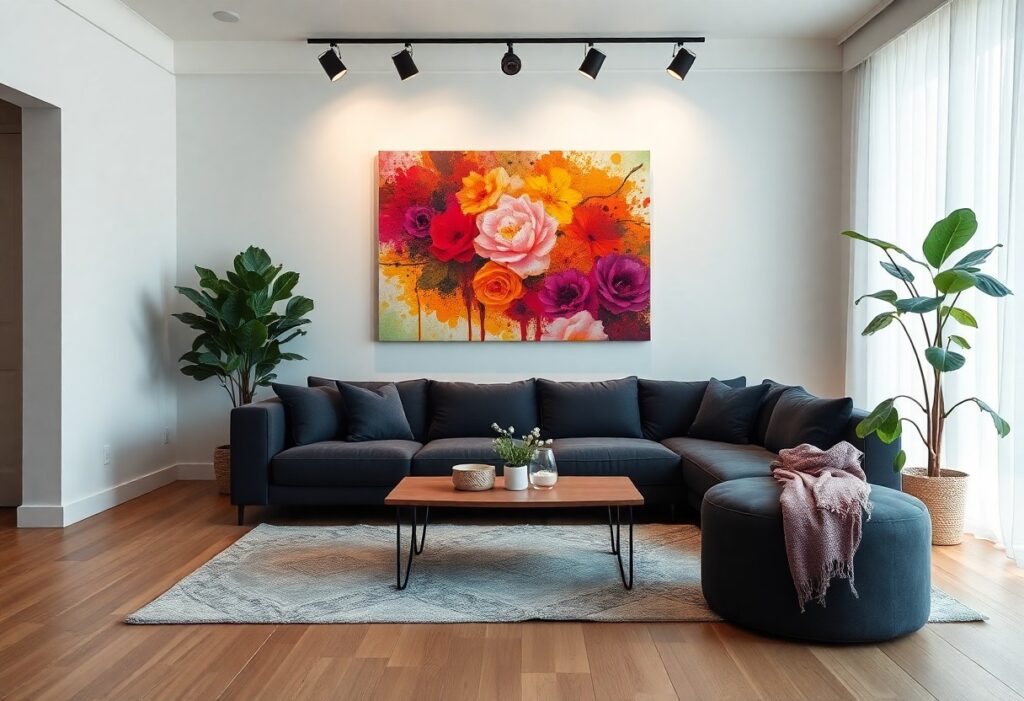
This bold painting in my living room used to get lost on a crowded wall, until I realized one powerful piece can transform an entire space. I’ve learned that choosing the right artwork and placing it with intention draws the eye and sets the mood. Now, I’ll show you how to make your art the heart of the room, not just decoration on the sidelines.
Key Takeaways:
- A single large-scale artwork can transform an underwhelming wall into a destination within the room, such as a bold abstract painting anchoring a living room above a neutral sofa.
- Positioning the artwork at eye level, typically centered between 57 and 60 inches from the floor to the center of the piece, ensures immediate visual engagement without straining the viewer’s gaze.
- Complementary colors pulled from the artwork-like a mustard yellow pillow or deep teal vase-can subtly echo the piece’s palette throughout the space, tying the room together without overwhelming it.
Choosing Your Perfect Statement Piece
When I look for a standout artwork, I focus on what draws my eye and sparks conversation. A bold abstract painting or a large black-and-white photograph can transform a quiet corner into a visual anchor. The right piece reflects your personality while enhancing the room’s energy. Perceiving art as an extension of self makes the choice feel natural and meaningful.
Factors to consider for your personal style
- Choose a color palette that complements your existing decor
- Select a subject matter that resonates with your interests or memories
- Consider the frame style-modern, rustic, or ornate-to match your taste
- Think about the medium, whether it’s canvas, metal, or mixed media
I always advise paying attention to the subtle details that speak to your everyday aesthetic. Perceiving harmony between your wardrobe, furniture, and art helps create a space that feels authentically yours.
How to pick a mood that fits the room
I match the artwork’s tone to the room’s purpose-calming seascapes for bedrooms, energetic pieces for home offices. A moody, dark-toned landscape can add intimacy to a reading nook, while a bright, playful print lifts a breakfast area. The emotional temperature of the art should support how you use the space.
Art doesn’t just fill a wall, it influences how you feel in a room. When I hang a piece above the sofa, I consider whether it invites relaxation or sparks discussion. A large-scale photograph of a misty forest brings quiet depth to a living room, while a vibrant pop art portrait energizes a hallway. The mood of the artwork becomes the mood of the room. Perceiving this emotional ripple effect helps me choose pieces that do more than decorate-they connect.
Finding the Best Spot in Your Home
I always start by walking through your space like a guest would, noticing which wall catches your eye first. The best spot usually aligns with natural sightlines-like the wall opposite the front door or the one you face from your favorite chair. For inspiration on how to decorate around a focal art piece, check out this discussion where real homeowners share their before and after setups.
Identifying the natural focal point
Rooms often have a built-in anchor, like a fireplace, large window, or exposed beam wall, that draws the eye before any decor is added. I look for these architectural highlights because they create a natural foundation for hanging statement artwork. Placing your piece here reinforces the room’s inherent balance and makes the art feel intentional, not forced.
Tips for clearing visual distractions
Clutter competes with your artwork, so I remove small decor items, cords, or mismatched frames nearby. Grouping cables with clips, using neutral baskets, and limiting shelf objects help keep attention on the piece. Clear surfaces, hide electronics, edit accessories. Any lingering visual noise weakens the impact.
- Clear surfaces near the artwork to avoid competing textures
- Hide electronics with covers or closed cabinetry when possible
- Use neutral tones in adjacent decor to let the art stand out
- Limit wall objects within a three-foot radius of the piece
I once helped a client hang a bold abstract painting above their sofa, only for it to get lost among throw pillows and a busy bookshelf. After simplifying the surrounding area and swapping colorful knickknacks for monochrome vases, the artwork finally took center stage. Any leftover decor now supports, rather than distracts from, the statement piece.
Getting the Size and Scale Just Right
I once hung a petite painting above a wide sofa and instantly regretted it. The artwork looked lost, like a footnote in a novel. A statement piece should command attention, not whisper from the wall. I now aim for art that covers at least two-thirds of the furniture’s width beneath it. This balance creates harmony and ensures the piece feels intentional, not an afterthought.
Measuring for maximum impact
Before I hang anything, I measure the wall space and sketch a mock-up with painter’s tape. This simple trick reveals how the proportions will feel in real life. An oversized frame can overwhelm a small room, while a tiny piece on a large wall feels like a mistake. Getting the dimensions right means your art fills the space without dominating it.
How to balance art with your furniture
I always center the artwork over key furniture like sofas or beds, keeping the bottom edge 6 to 8 inches above. This creates a visual connection, making the art and furniture feel like a unified group. If the piece floats too high, it disconnects from the room and looks accidental rather than designed.
When I balance art with furniture, I consider both height and visual weight. A low, wide credenza pairs well with a broad horizontal canvas, while a tall bookshelf can anchor a vertical piece nearby. I once placed a bold, dark painting above a light-colored sofa and noticed how the contrast grounded the whole arrangement. The colors and shapes in the art echoed in the pillows and rug, tying everything together without matching exactly.
Lighting Your Artwork Like a Pro
I always pay close attention to how light shapes the mood around my favorite pieces. Proper lighting doesn’t just highlight details, it transforms how you experience the art. For inspiration on how to decorate using artwork as the focal point, I often visit this curated pin, where lighting and composition work in harmony.
Making the most of natural light
South-facing walls give me the most consistent daylight, ideal for showcasing colorful canvases without glare. I avoid placing art in direct sunlight for long periods, as UV exposure can fade pigments over time. Sheer curtains help diffuse harsh beams while keeping the space bright. Natural light changes throughout the day, adding subtle drama to texture and tone.
Quick tips for adding accent lighting
- Use adjustable picture lights mounted above the frame
- Try track lighting for flexible direction and coverage
- Install LED strips behind the piece for a halo effect
- Choose warm-toned bulbs to enhance depth and warmth
Perceiving the texture and shadow in my artwork after dark makes it feel like a new piece each evening.
When I add accent lighting, I focus on placement and beam angle to avoid hotspots. Picture lights with dimmer switches let me adjust brightness based on the time of day or mood. Track lighting works well in open spaces where I rotate art seasonally. Recessed ceiling spots with adjustable heads give a clean, gallery-like finish. LED strips tucked behind the frame create a floating effect that surprises guests every time. Perceiving how light wraps around the edges adds dimension I didn’t notice before.
Coordinating Your Decor with the Art
I let the artwork guide my color choices throughout the room, pulling even the smallest hues from the piece to create a cohesive flow. A single accent shade in the painting becomes the thread that ties your cushions, throws, and rug together, making the whole space feel intentional and connected. This subtle repetition feels natural, not forced.
How to pull colors into your cushions and rugs
I often pick one or two secondary colors from the artwork-something not dominant but present in the background or a small detail-and use them in patterned cushions or a textured rug. You don’t need to match exactly; a close tone works just as well and feels more organic. The slight echo of color creates harmony without overwhelming.
Keeping surrounding elements simple and clean
I avoid clutter near the artwork so it stays the clear focus. Simple furniture lines and minimal decor around the piece keep your eye drawn to the art, not competing objects. The emptier space around it actually makes the statement stronger, giving it room to breathe and shine.
Furniture with clean silhouettes, like a low-profile sofa or a sleek console, supports the artwork without stealing attention. I choose neutral upholstery or muted finishes that recede, allowing the colors in the art to feel bolder by contrast. Even my lamp shades are plain, in soft white or gray, so the frame and canvas remain the star.
To wrap up
I’ve found that hanging a bold piece of art in just the right spot transforms how you experience a room, almost like it starts a conversation every time you walk in. I once hung a large abstract canvas in my living area, and suddenly the whole space felt more personal, more alive. You don’t need a gallery wall or expensive furniture to make it work-just one strong piece, placed with intention, can anchor your whole room. I always look for that moment when the colors in the artwork echo something small, like a pillow or a rug, because those quiet connections make the design feel natural. When you step back and see how everything aligns, it’s not about perfection, it’s about character.