
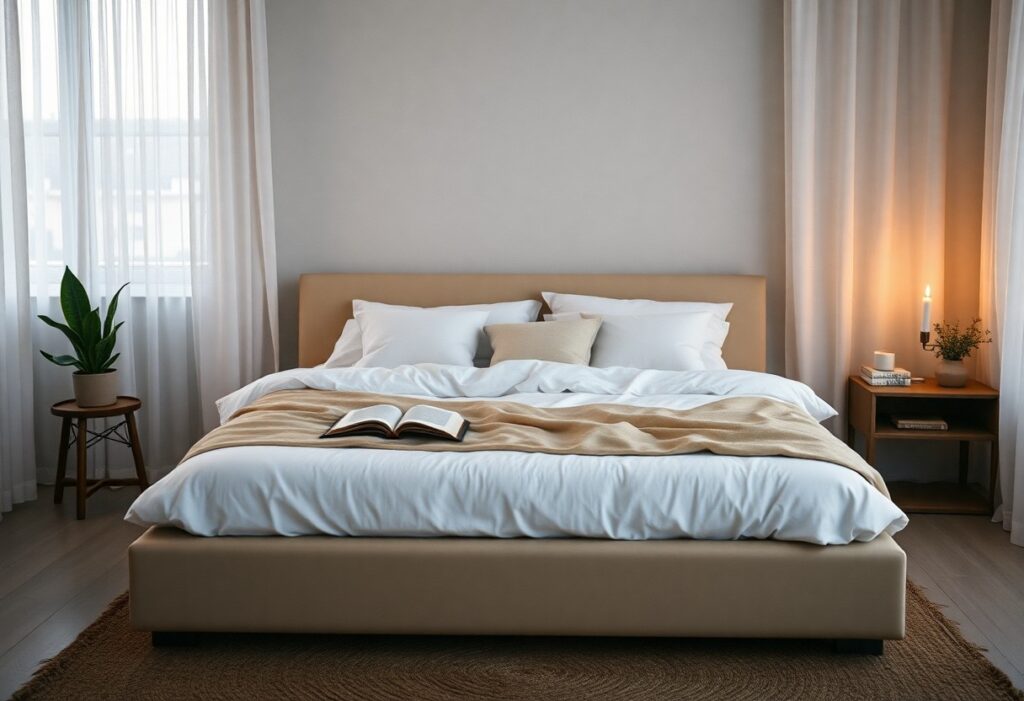
Many people overlook how much their bedroom environment affects sleep and stress levels. I’ve found that small, intentional changes can make your space feel calmer and more restful. From lighting to fabric choices, I’ll show you simple ways to create a peaceful retreat that supports deep relaxation every night.
Key Takeaways:
- Choose a calming color palette with soft neutrals or cool tones like blues and greens to create a peaceful atmosphere that helps signal your brain it’s time to unwind.
- Reduce clutter by keeping surfaces clear and storing items out of sight, which minimizes visual distractions and promotes a sense of order and calm.
- Use layered lighting with dimmable lamps, string lights, or candles to avoid harsh overhead lights and create a warm, inviting glow perfect for relaxation.
The Decadence of Fine Textiles
I believe your bedroom should feel like a sanctuary, and nothing transforms a space faster than the touch of luxurious fabrics. I choose fine textiles not just for beauty, but for how they engage the senses-softness against skin, gentle drape, subtle sheen. When you surround yourself with quality materials, relaxation becomes instinctive.
Choosing Silk and Egyptian Cotton
Silk offers a cool, smooth embrace that regulates temperature and reduces friction on skin and hair. I recommend it for pillowcases and lightweight layers. Egyptian cotton, with its long fibers, delivers unmatched softness and durability in sheets and duvet covers. You’ll notice the difference the first night you sleep under them.
The Architecture of a Perfect Bed
Layering matters more than you think. I start with a fitted sheet, add a flat sheet, then a duvet or comforter. A well-made bed with balanced proportions invites rest. I include two sleeping pillows and one decorative, keeping the look clean and uncluttered. The right structure supports both comfort and visual calm.
I build my bed like a foundation-each layer serving a purpose. A high-quality mattress topper adds softness without sacrificing support. I tuck sheets tightly at the foot of the bed, leaving just enough give for movement. This blend of structure and comfort keeps me sleeping deeply, night after night. Your body responds to order, and your mind follows.
Exiling the Vulgarity of Clutter
I clear every surface of unnecessary items because visual chaos breeds mental unrest. You don’t realize how much tension a pile of unsorted mail or a tangle of cords creates until it’s gone. A clean space isn’t just pleasing-it’s necessary for true relaxation. Simplicity isn’t empty; it’s intentional.
Removing the Remnants of Labor
I never allow work materials to linger where rest should reign. Your laptop, notebooks, or unpaid bills carry the weight of obligation. When you banish these objects, you send a signal to your brain: this room is off-limits to stress. Peace can’t settle where duty still lingers.
Creating a Vacuum for the Soul
I leave open space-on nightstands, floors, even shelves-because emptiness isn’t lack, it’s invitation. That void gives your mind room to breathe. You’ll notice how much more calm flows in when there’s literal space for it. Stillness thrives in open corners.
Leaving physical emptiness in your bedroom does more than look clean-it changes how you feel the moment you walk in. I once filled every inch with decor, thinking more meant better. But after removing half of it, I felt lighter, as if the room could finally exhale. That open space isn’t wasted; it’s where your thoughts slow, your breath deepens, and your nervous system unwinds. True comfort isn’t in what you add, but in what you let go.
The Olfactory Pursuit of Peace
I’ve found that scent shapes mood more than most realize. A few drops of lavender in your diffuser can quiet a restless mind within minutes. For calm bedroom design ideas that truly work, explore Calm bedroom design ideas | King Living-they blend sensory wellness with intentional decor.
Scenting the Air with Midnight Flora
One night, I tried a blend of chamomile, sandalwood, and a hint of bergamot-the effect was immediate. Your bedroom becomes a sanctuary when you choose florals that soothe rather than stimulate. Midnight flora isn’t just poetic; it’s a sensory strategy.
The Ritual of the Evening Mist
Spritzing a linen spray before bed signals your brain that it’s time to unwind. I keep a small bottle by my pillow, and with just two pumps, my space feels cleaner, calmer, and deeply personal.
What makes the evening mist powerful isn’t just the scent-it’s the consistency. I use a spray made with distilled water, a touch of witch hazel, and vital oils. You don’t need much; the ritual itself becomes a cue to your nervous system: rest is non-negotiable. Over time, your body begins to respond before the mist even lands.
A Symphony of Subdued Color
I believe soft, muted tones transform a bedroom into a sanctuary. Choosing gentle shades over bold statements helps lower visual noise and supports mental calm. You’ll find peace in colors that whisper rather than shout. For deeper insights, check out this How do I make my bedroom more cozy and peaceful? I’m … thread where real people share real solutions.
Escaping the Tyranny of Brightness
Harsh colors can disrupt your ability to unwind. I avoid neon walls and intense contrasts because they keep the mind alert. You’re better off with tones that mimic twilight or fog-subtle, soft, and inherently calming. Lowering chroma reduces stress and makes rest feel natural, not forced.
Selecting Hues for Gentle Dreams
Cool grays, dusty blues, and warm taupes invite stillness. I pick these because they mirror nature’s quiet moments-dawn light, stone, or shadowed foliage. You’ll notice your breathing slows when surrounded by such tones. These hues support melatonin production, making it easier to fall asleep.
When I choose paint or fabric, I hold swatches up at different times of day. Natural light changes how color feels-what looks calm at noon may feel cold at dusk. You want a shade that remains soothing in lamplight. Colors with warm undertones often feel cozier at night, even if they’re technically neutral. Test large samples before committing.
Conclusion
As a reminder, I design your bedroom to support calm by focusing on soft lighting, comfortable textures, and a tidy space. I choose soothing colors and reduce noise to help you unwind. When you align the room with your personal sense of peace, it naturally becomes a retreat where rest comes easily.