
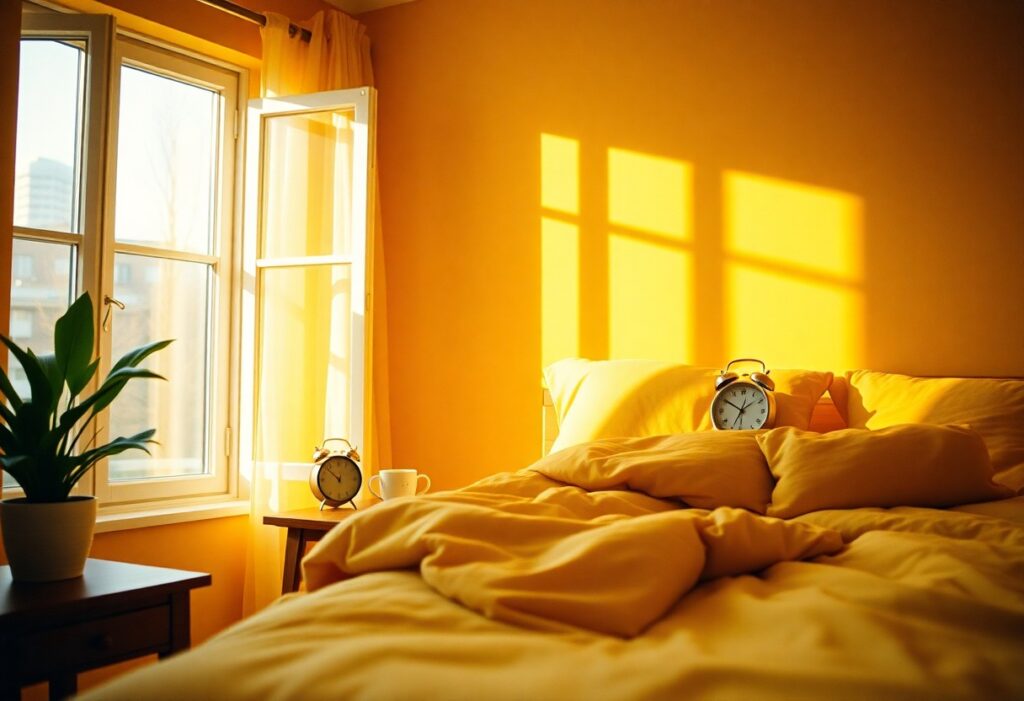

Many people overlook how color impacts morning energy, but I’ve found that exposure to bright yellow or soft blue light upon waking can significantly boost alertness. I use these hues in your bedroom lighting or decor to help regulate your circadian rhythm. You’ll feel more awake and focused when your environment supports natural energy flow.
Key Takeaways:
- Bright, cool colors like blue and green are linked to increased alertness upon waking, as they mimic natural daylight and help regulate circadian rhythms.
- Exposure to soft blue light in the morning can reduce sleep inertia, helping people feel more awake and focused shortly after rising.
- Personal preference plays a role-some individuals feel more energized by warm tones like orange or yellow, especially if those colors are associated with positive morning experiences.
The Solar Influence
I’ve noticed how natural sunlight shapes my energy levels each morning. Exposure to early daylight helps reset your circadian rhythm, signaling your body to stop producing melatonin. This direct connection between light and alertness makes sunrise more than just a visual cue-it’s a biological trigger that prepares you to be awake, focused, and ready for the day ahead.
Golden Rays of the East
Each dawn, I open my curtains to welcome the soft glow from the eastern sky. These golden rays carry a warmth that feels gentle yet energizing, mimicking the hues of optimism and new beginnings. You don’t need full sunlight to benefit-just a few minutes of this natural palette can elevate your mood and sharpen mental clarity.
The Awakening Power of Yellow
Yellow stands out to me as the most stimulating color for morning energy. When I surround myself with bright yellow-through decor, clothing, or lighting-I feel a noticeable lift in alertness. It mimics sunlight even on cloudy days, tricking your brain into feeling more awake and engaged within minutes of exposure.
I’ve experimented with different shades, and I’ve found that warm, lemon-toned yellows work best to stimulate mental activity without causing eye strain. Cooler or neon yellows can feel harsh, even triggering mild headaches in sensitive individuals. But the right tone activates the nervous system gently, enhancing focus and creating a sense of cheerful momentum that carries through the morning.

Terrestrial Greens
I’ve found that grounding shades drawn from the earth-like moss, sage, and forest-quietly signal safety and renewal. These colors don’t shout for attention; instead, they awaken your senses with calm assurance, helping you rise without jarring your nervous system. I recommend surrounding yourself with these tones if you want a gentle, steady start.
Leaves in the Early Mist
Walking through a garden at dawn, I notice how dew-kissed leaves glow with a soft, cool luminance. This subtle brightness mimics natural waking cues, syncing with your circadian rhythm. You don’t need direct sunlight-just the quiet presence of green in low light can ease your mind into alertness without strain.
Growth as a Visual Catalyst
Watching a plant unfurl each morning, I see how visible growth inspires internal momentum. You respond to this quiet progress on a subconscious level-it signals possibility and forward motion. I’ve observed that even static images of sprouting greens can prompt a similar psychological lift upon waking.
What makes growth so powerful is its silent promise of renewal. I’ve studied how the human eye is drawn to subtle changes in form and color, especially in the first moments of awareness. When you wake to a space that reflects organic development-like a small potted herb on your windowsill-you absorb that energy. It’s not just color; it’s the implied movement within the green that stirs motivation. Your brain registers life in motion, and that sparks a parallel urge to begin.
Celestial Blues
I’ve found that shades mimicking the high morning sky do more than just please the eye-they signal your brain to shed drowsiness. According to The Best Wake Up Colors (Even if You’re Not a Morning …, cool tones like sky blue can support alertness naturally.
Clarity of the High Sky
Blue reminds me of open horizons just after sunrise, a hue that clears mental haze. I notice your focus sharpens when this color greets you in the morning, awakening awareness without strain. It’s not about brightness-it’s about authenticity to nature’s rhythm.
Removing the Fog of Sleep
Color can dissolve grogginess like sunlight burning off mist. I use soft blue lighting in my bedroom during early minutes, and you may find it helps reset your internal clock gently. This isn’t a jolt-it’s a signal, quiet but firm.
When I first tried simulating dawn with celestial blue tones, I expected little. Instead, I woke before my alarm, mind alert, as if my body recognized the cue. The right blue doesn’t shock you awake-it invites clarity, easing you out of sleep’s residue with calm precision. It’s subtle, but the effect is real.
The Fire Within
I feel it every morning-a deep, rising warmth that stirs my body before my mind wakes. This energy isn’t random; it’s tied to the colors that mirror fire, the original source of human activation. Orange and red don’t just catch your eye-they ignite your nervous system, signaling alertness and movement. I’ve learned to harness this, letting those tones pull me from stillness into action.
Orange and the Pulse of Spirit
You respond to orange on an emotional level-it’s cheerful, alive, and subtly urgent. I notice how it lifts mood without overwhelming, making it ideal for easing into the day. It stimulates creativity and circulation, bridging calm and intensity. That soft flame-like glow invites energy, not force, guiding you into motion with warmth and purpose.
Red as a Primal Call
Red commands attention the moment you open your eyes. I’ve seen how it accelerates heart rate and sharpens focus, acting as a biological wake-up signal. It’s the color of urgency and survival, deeply wired into your instincts. Used wisely, it pulls you out of inertia with unmatched power.
When I expose myself to red light in the early hours, I feel a distinct shift-my body acts as if sunrise has truly arrived. This isn’t just psychological; red light penetrates deeper into tissue, influencing circadian biology by suppressing melatonin more effectively than other hues. Even brief exposure can reset your internal clock, making it one of the most potent tools for morning energy. I use it sparingly, though-too much too soon can spike stress hormones, turning activation into agitation. Balance is key.
Designing the Morning Chamber
I shape the first space you encounter each morning to align with your body’s natural rhythm. Light doesn’t just illuminate-it signals. I use color to trigger alertness and support mental clarity from the moment your eyes open. This room isn’t decorative; it’s a functional tool for energy.
Painting the Inner Walls
Yellow coats the walls because it stimulates the nervous system without overwhelming it. I avoid dull tones-they slow you down. A soft, warm yellow mimics sunrise, gently coaxing your brain into action. This isn’t just paint; it’s a daily dose of quiet energy.
Selecting the Fabric of Sight
Sheer white curtains filter dawn’s first light, diffusing it evenly across the room. I choose fabrics that allow natural brightness to build gradually, syncing with your circadian rise. What you see upon waking shapes how you feel-this fabric guides that moment with precision.
I pay close attention to how light interacts with fabric because it directly affects your alertness. The white curtains aren’t purely aesthetic-they’re engineered to soften harsh contrasts while still delivering enough luminance to suppress melatonin. I’ve found that even a slight delay in light exposure can dull your morning momentum, so the material must be thin enough to let the sky’s signal through but structured enough to diffuse glare. This balance makes the difference between a sluggish start and one filled with immediate, natural energy.
Natural Illumination
I rely on sunlight to reset my rhythm each morning-its shifting hues signal your body to ease into wakefulness. For gentle wake up light ideas | Philips …, I recommend mimicking dawn with smart lighting that brightens gradually. This natural cue boosts alertness without jarring shocks to your system.
Filtering the Morning Sun
Light through sheer curtains feels softer, yet still effective. I’ve noticed you respond better when harsh glare is diffused, allowing your eyes to adjust naturally. This filtered glow maintains brightness while reducing strain, creating a calm, energizing start without overwhelming your senses.
Shadows and Their Vibrant Contrasts
Shadows aren’t just absence-they shape how you perceive light. I’ve found that contrast between shadow and sunlit areas adds depth, making a room feel more alive. That dynamic interplay can sharpen focus and signal your brain to engage, delivering a subtle but powerful wake-up cue.
When sunlight hits a wall and casts defined edges, your visual system registers change more clearly. I pay attention to these contrasts because they stimulate alertness on a subconscious level. The sharper the boundary between light and dark, the more awake and oriented you feel-nature’s own design for energizing your mornings.
Final Words
I find that bright yellow is the color most likely to help you wake up feeling energized. Your eyes respond strongly to its high visibility, and it stimulates mental alertness. I’ve seen how incorporating yellow into your morning environment-through lighting or decor-can support a more vibrant start to your day.