
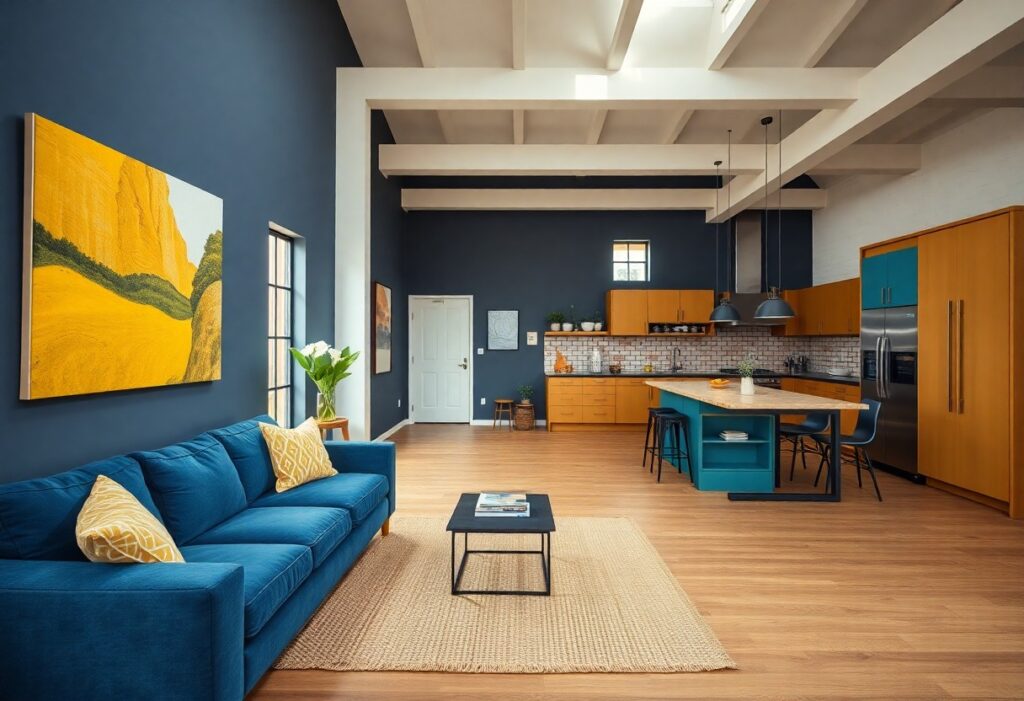
Design can quietly guide the eye and shape how you experience a room, even without walls. I’ve learned that a single open space doesn’t have to feel like one big zone. By using color thoughtfully, you can define your kitchen, living area, or dining nook with clear visual boundaries that feel natural, not jarring. You don’t need structural changes-just a brushstroke of intention.
Key Takeaways:
- A mid-sized SaaS firm redesigned its office using warm tones in collaboration zones and cooler hues in focus areas, resulting in a noticeable shift in how employees engaged with each space, staying longer in zones meant for deep work.
- Painting a single wall behind a sofa in a living area can visually separate the lounge from a dining space without blocking light, a technique used effectively in a Brooklyn loft with a deep terracotta accent against soft gray surroundings.
- Using area rugs in contrasting colors under dining or work tables helps define purpose without walls, as seen in a Chicago apartment where a navy circular rug clearly marks the conversation area within a larger open room.
Picking the Perfect Palette
I start by selecting a cohesive color story that flows across the open space, using three to five core hues to maintain harmony. A mid-sized SaaS firm might use soft blues and warm grays to keep collaboration areas calm yet focused. Perceiving how light shifts throughout the day helps me refine choices so colors feel intentional, not accidental.
Factors to consider for natural light
- How window placement affects color intensity in different zones
- Whether north-facing rooms make cool tones feel flat without added warmth
- How sheer curtains can soften harsh midday glare on bold walls
I notice sunlight amplifies yellow undertones in beige paints, sometimes making them feel too golden by 3 p.m. Perceiving these shifts early prevents mismatched moods between kitchen and lounge areas.
How to choose a mood for each zone
I match colors to how you use each space, like calming sage in reading nooks or energizing terracotta near the kitchen island. Your morning coffee spot might thrive with warm, earthy notes while the workspace stays grounded in soft greys. Perceiving the rhythm of your day shapes these quiet distinctions.
I once helped a client paint their dining area in deep olive, a choice that surprised them but made sense once they saw how it separated meals from lounging just ten feet away. That richness didn’t overpower because the adjacent living zone stayed light and airy with cream upholstery and bleached wood. Your eye adjusts naturally when each zone has its own quiet personality, and color becomes a silent guide. Perceiving these subtle shifts makes open plans feel both spacious and intimate.
Defining Areas with Accent Walls
I use accent walls to clearly mark where one space ends and another begins, especially in open layouts where boundaries aren’t obvious. A bold hue behind the sofa signals the lounge, while a warm tone near the table defines the dining zone. The contrast doesn’t need to be extreme-a subtle shift in saturation or undertone can be just as effective in guiding the eye and creating separation.
Selecting a focal point for the lounge
A fireplace or TV wall often becomes the natural anchor, and I paint that surface in a deeper shade to draw attention. You don’t need bright colors-a moody navy or earthy terracotta can make the lounge feel intentional and cozy. The key is choosing one wall that’s immediately visible when entering the space, so the color has maximum impact from multiple angles.
Creating a cozy boundary for dining
I pick the wall behind the dining table to apply a rich, warm tone that wraps the area in intimacy. This simple move makes meals feel more gathered and personal, even in a wide-open room. Using a color that contrasts slightly with the adjacent kitchen or living area creates a soft but clear distinction without walls.
For a mid-sized SaaS firm’s office kitchenette and dining nook, I chose a deep olive on the back wall paired with walnut shelves and warm pendant lighting. The color recedes slightly, making the space feel tucked away, while the natural wood tones keep it from feeling closed off. Even when colleagues gather for lunch, the area maintains its identity, proving that a single wall can reshape how we experience function and flow.
Smart Tips for Seamless Transitions
Building a cohesive flow between zones in an open floor plan starts with thoughtful color choices. I rely on a neutral base to connect different areas while using accent colors to define each space’s purpose. The 60-30-10 rule helps maintain visual balance without overwhelming the eye. Knowing Color Drenching Tips for Open Floor Plans.
Factors for choosing colorful decor
Lighting, existing furniture tones, and how often you use a space all influence which colorful decor works best. A kitchen can handle bolder hues since it’s lively and social, while a reading nook might benefit from softer, calming accents.
- Consider how natural light shifts through the room
- Match new pieces to undertones in your flooring or countertops
- Opt for washable fabrics in high-traffic spots
Knowing your daily routines helps you pick shades that feel joyful, not jarring.
How to use art to unify the layout
I love hanging a series of framed prints across adjacent zones to visually link them. When the artwork shares a common color or theme, it creates a quiet thread that ties the kitchen to the living area or the dining nook to the hallway.
One client used a set of botanical illustrations with deep teal and mustard borders, placing one in each functional area. Even though the spaces served different purposes, the repeated tones in the frames and matting made the whole apartment feel curated and connected. The art didn’t just decorate-it guided the flow.
Final words
I’ve found that a single shade on one wall can quietly tell your eye where the living area ends and the dining space begins, no walls needed. When you choose just one or two colors to repeat in small touches-a throw pillow, a vase, the edge of a rug-you create subtle threads that tie the room together. I once helped a friend paint a narrow wall behind her sofa deep sage, and suddenly her open kitchen felt cozier, more defined, like it had its own personality without closing anything off.